Engineering Execution & Automation Systems
Tooling design, robotic simulation, and
component manufacturing for BIW and Special Purpose Machinery (SPM).
The Auttomatta Mission
From Process to Production
“We transform validated process files into high-integrity hardware. Auttomatta is where the theoretical layout becomes a physical reality through tool design, robotic synchronization, and PLC logic integration.”
Core Capabilities:
Automotive BIW Tooling: 3D concept through to 2D manufacturing prints. Specialist expertise in work holding, fixtures, and support systems.
Digital Twin & Simulation: Virtual validation using RobCAD, DELMIA, and Process Simulate. We focus on path planning, OLP, and reach feasibility to prevent post-build corrections.
Special Purpose Machinery (SPM): Full-cycle machine design, manufacturing, assembly, and global shipment to client floors.
Controls Engineering: PLC, HMI, and SCADA architecture support (Siemens TIA, Rockwell Studio 5000) designed for long-term maintainability.
Component Manufacturing: In-house manufacturing of automotive BIW fixture/tooling make-components.
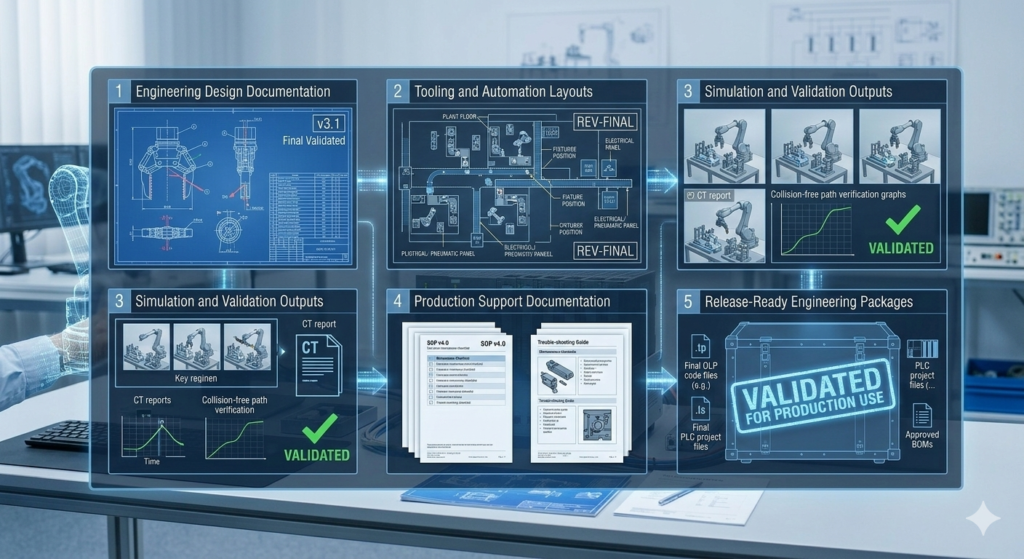
Typical Deliverables: Release-ready engineering packages, production support documentation, and validated automation layouts.
Automation & Manufacturing Engineering
Scope includes:
- Automation engineering support
- Manufacturing system detailing
- Equipment and station-level engineering
- Integration readiness
Auttomatta supports automation engineering across manufacturing environments, ensuring systems are engineered for reliability, maintainability, and production stability.
01
Tooling & Production System Design
We develop tooling and production system designs aligned with approved process definitions and customer standards.
This includes:
- Tooling concept and detailed design
- Gripper, fixtures, and support systems
- General Assembly Tooling / End of line Tooling
- Operator safety and usability considerations
- Design alignment with manufacturing constraints
Design intent is preserved through disciplined engineering controls.
02
Robotic Simulation & Validation
Auttomatta applies robotic simulation as a validation and coordination tool – ensuring designs are executable before physical realization.
Applications include:
- Robotic reach and motion feasibility
- Collision and clearance validation
- Layout and cell-level verification
- Program structure readiness
Simulation supports design integrity, not post-build correction.
03
Layout & System Integration Support
We ensure that individual engineering elements integrate into a coherent manufacturing system.
This includes:
- Layout validation
- Equipment and robot positioning
- Interaction between tooling, automation, and operators
- Compliance with spatial, safety, and operational constraints
The outcome is a system that works as a whole – not as isolated components.
04
Controls & Industrial Automation Support
Auttomatta provides controls engineering support aligned with system design and operational intent.
This includes:
- PLC, HMI, and SCADA engineering support
- Control architecture alignment
- Integration readiness for commissioning phases
Controls work supports stability, diagnosability, and long-term maintainability.
Production & Release Readiness
Auttomatta engineering concludes with release-grade documentation and validation support. Deliverables are structured to support:
- Manufacturing release
- Supplier and integrator coordination
- Commissioning and ramp-up phases
The objective is predictable execution, not iterative correction.
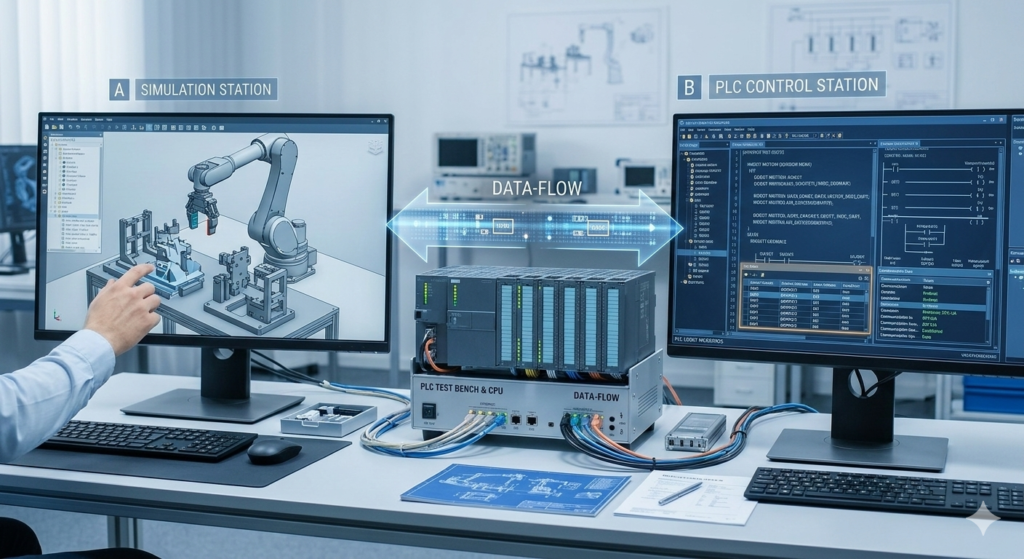
Digital Integration & Virtual Commissioning
“We don’t just simulate motion; we validate the code. Our PLC and Electrical teams develop the connection logic that interfaces the real-world controller with the digital twin, ensuring every interlock and safety protocol is proven before the first tool is manufactured.”
Typical Deliverables
- Engineering design documentation
- Tooling and automation layouts
- Simulation and validation outputs
- Production support documentation
- Release-ready engineering packages
All outputs are designed for industrial use, not conceptual presentation.